Re: Concerns Related to METRC Implementation
Dear Acting Executive Director Filburn,
On behalf of the Cannabis Association of New York (CANY), I would like to welcome you to your leadership role within the Office of Cannabis Management. As you work to refine the trajectory of New York’s cannabis market, CANY and our members across the licensed supply chain are eager to serve as a resource for practical, industry-grounded solutions.
We write today to bring to your attention several optimization opportunities regarding the METRC seed-to-sale system. While we fully support a robust track-and-trace framework to ensure consumer safety and state accountability, the current implementation has encountered “real-world” friction points. Specifically, we wish to address the requirement for individual retail tags, laboratory testing sequences, and sampling protocols that currently diverge from established best practices in other mature METRC markets.
Market Context and Operational Efficiency As New York moves out of its foundational phase, our collective goal is to stabilize the market and ensure the viability of our small businesses and microbusinesses. During the initial METRC rollout, the industry navigated significant learning curves and technical bottlenecks. While these challenges provided valuable data, they also highlighted areas where current guidance creates unintended financial strain and operational “logjams.” Currently, licensees often find themselves navigating inconsistent feedback between METRC, laboratories, and the OCM. We believe this is a pivotal moment to establish a “Single Source of Truth”-a unified, New York-specific written guidance that eliminates ambiguity, reduces the risk of unintentional non-compliance, and allows the OCM staff to oversee the market with greater clarity.
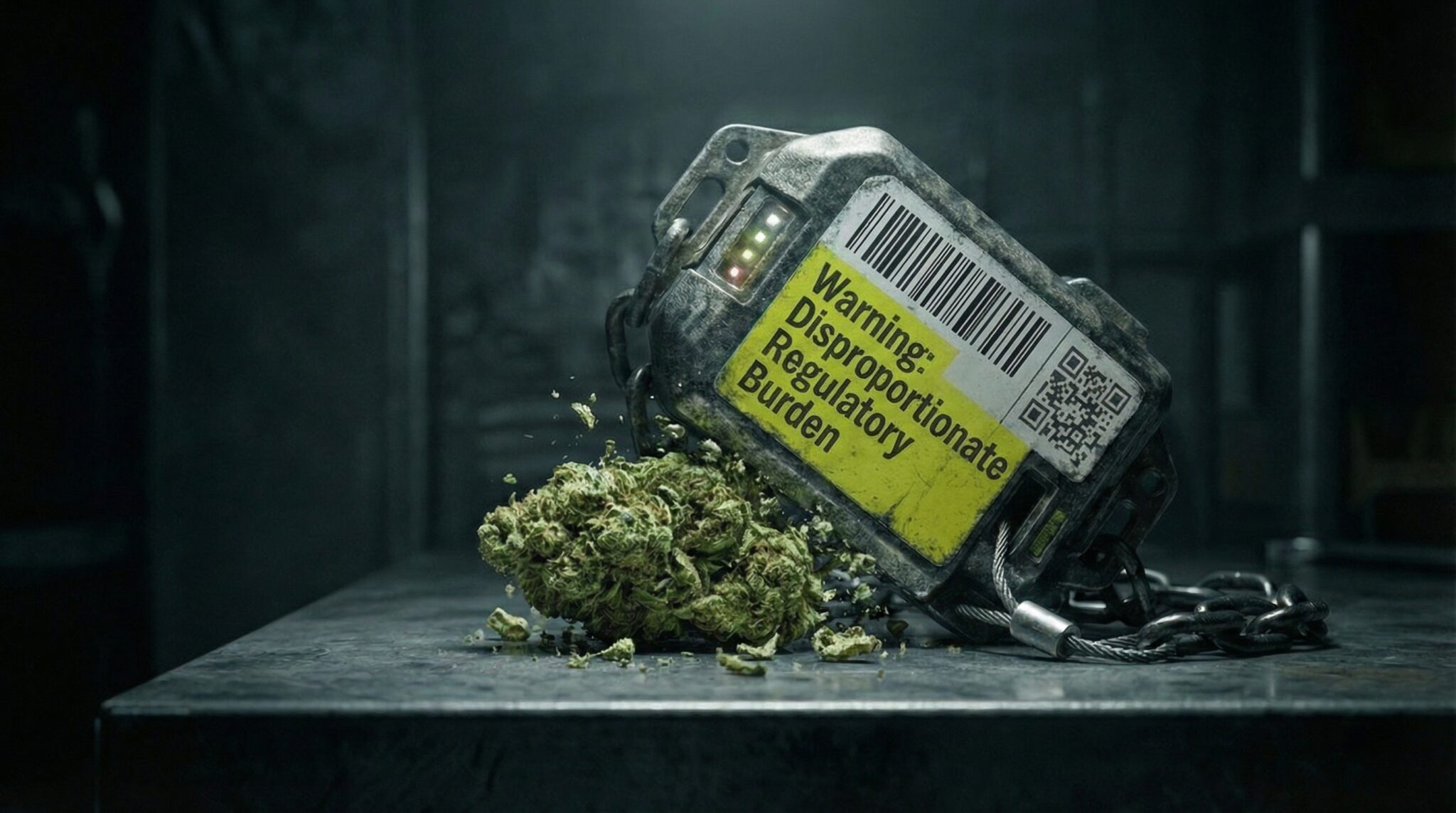
The Impact of Individual UID Tagging New York is currently an outlier in requiring individual retail UID tags to be physically affixed to every product unit by the producer.
- The Challenge: This mandates an immense labor and material cost (waterproof, tamperproof printing) that falls disproportionately on microbusinesses. Furthermore, in the event of a product recall, the current system requires the OCM to track thousands of individual digital tags rather than a single batch ID, which complicates the very safety goals the system was built to achieve.
- Proposed Solution: Align New York with other METRC states by requiring tagging only at the batch or lot level. If individual UIDs remain a requirement, we propose that the State or METRC absorb the tag costs for small operators, or allow operators to source compliant tags from competitive third-party vendors to reduce overhead.
Modernizing Laboratory Testing and Batch Production Current guidance requires products to be fully manufactured (e.g., thousands of pre-rolls) before sampling can occur.
- The Challenge: This “finished-product-first” mandate forces small businesses to take on massive financial risk. If a batch fails, the labor and packaging are lost alongside the product. Scientifically, testing whole-flower lots prior to processing is the gold standard; it ensures homogeneity and prevents the oxidation that occurs when flower is ground prematurely for testing.
- Proposed Solution: Permit upstream testing of whole-flower batches (capped at 100 lbs). This allows producers to manufacture finished goods post-testing based on actual market demand, reducing waste and ensuring fresher products reach consumers.
Streamlining Retail Education via Sampling Product education is the backbone of a safe, professional market. Currently, METRC requires separate lab testing for every sample configuration, even if the material has already passed bulk testing.
- The Challenge: This creates duplicative costs reaching thousands of dollars for non-revenue-generating items.
- Proposed Solution: Allow educational samples to be derived from already-tested batches without requiring a secondary round of redundant laboratory testing.
A Collaborative Path Forward We view these recommendations not as a critique of what has been built, but as a roadmap for what New York’s market can become under your leadership. To ensure a smooth stabilization period, CANY respectfully urges the OCM to:
- Issue Clarification Memoranda: Create clear, written sources of operational guidance to replace informal or verbal directions.
- Exercise Enforcement Discretion: Allow for a “stabilization window” as licensees transition to updated protocols.
- Establish a Stakeholder Working Group: Include OCM staff, METRC representatives, and licensees to proactively identify and resolve technical hurdles before they impact the supply chain.
Our members are committed to transparency and safety. We believe that by aligning New York’s protocols with proven regulatory models, we can reduce the “cost of compliance” for small businesses while strengthening the integrity of the entire system.
We look forward to discussing these solutions with you and your team.
Respectfully,
Damien Cornwell President Cannabis Association of New York